Does “The Rainbow & Men” Teach What Scripture Teaches?
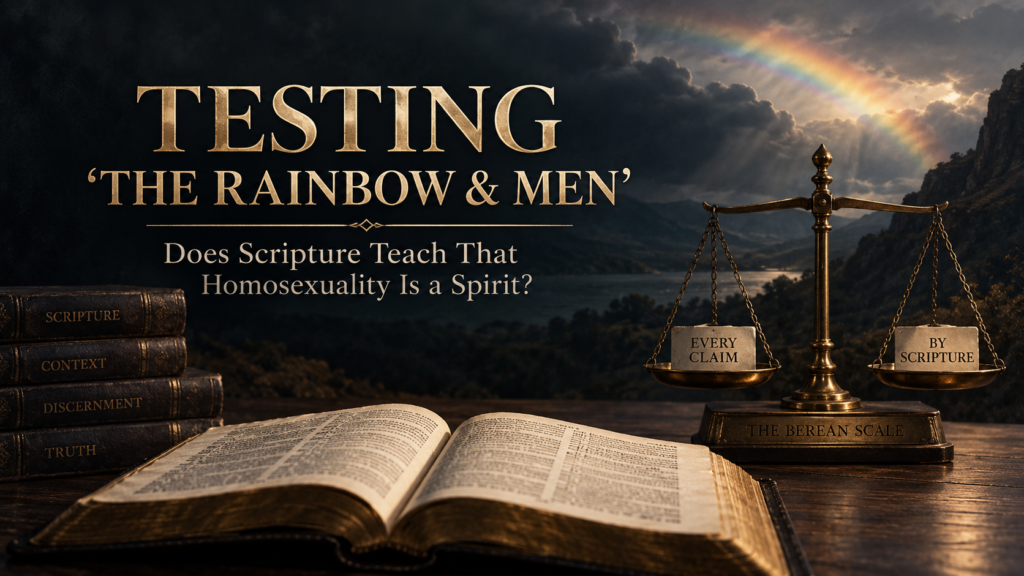
Genesis 9:8–17 defines the rainbow as Yahweh’s covenant sign. This study tests “The Rainbow & Men” against Scripture on demons, sexuality, trauma, and hybrids.
Study Index
Search The Berean Scale by passage, Bible book, doctrine, Greek or Hebrew term, or theological topic. Follow the evidence into the text instead of hunting through a chronological archive.
Search the library
Results update as you type. You can also combine search with a filter below.
Narrow the Library
Books currently represented in published studies.
Passage study, original language, doctrine, and prophecy.
Word studies, passages, doctrines, and recurring research themes.
Study Library
11 studies
Genesis 9:8–17 defines the rainbow as Yahweh’s covenant sign. This study tests “The Rainbow & Men” against Scripture on demons, sexuality, trauma, and hybrids.
John 20:28 presents Thomas addressing the risen Yeshua as “my Lord and my God.” This study examines the Greek wording, context, alternatives, and Father-Son distinction.
John 1:1 distinguishes the Word from the Father while describing him as theos. This study examines the Greek grammar, the “God” and “a god” translations, and the prologue’s wider claims about creation, incarnation, and divine status.
Hebrews 1:8 most naturally applies the direct address “O God” to the Son, while verse 9 distinguishes him from “God, your God,” who anoints him.
Mark 13:32 says that no one knows the day or hour—not the angels, nor the Son—except the Father. This study examines the verse’s context, Greek wording, Christological implications, and call to watchfulness.
Paul identifies the Father as the one God and Yeshua Messiah as the one Lord in 1 Corinthians 8:6. This study examines the verse’s context, Greek wording, Shema background, and competing theological interpretations.
First Timothy 2:5 says there is “one God” and “one mediator between God and mankind, the man Messiah Yeshua.” We examine the Greek, Paul’s wider usage, John 17:3, John 20:28, and the strongest Trinitarian reading.
Celestial’s “The Time Has Come” prophecy makes specific claims about aviation disasters, MH370, spiritual interference, judgment, and the end times. We put the message on the scale, compare its claims with Scripture, and separate what the Bible explicitly teaches from what remains interpretation or speculation.
Read Study
John 17:3 calls the Father “the only true God” and identifies Yeshua as the Messiah He sent. We examine the Greek, John 17:5, John 20:28, and the strongest Trinitarian reading.
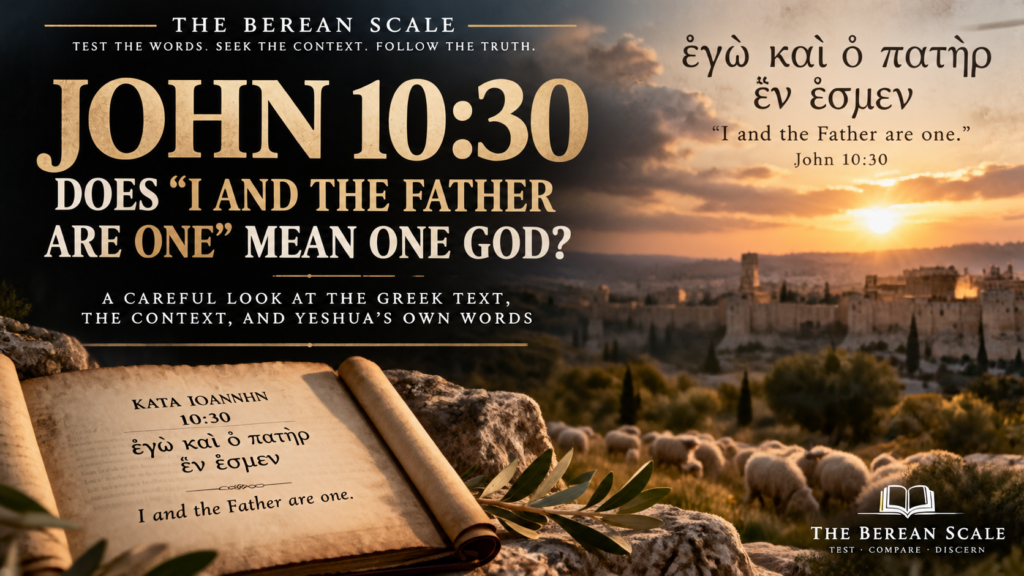
The Short Answer John 10:30 does not explicitly say that Yeshua and the Father are “one God,” “one being,” or “one essence.” It says: “I and the Father are one.” The immediate ... Read more
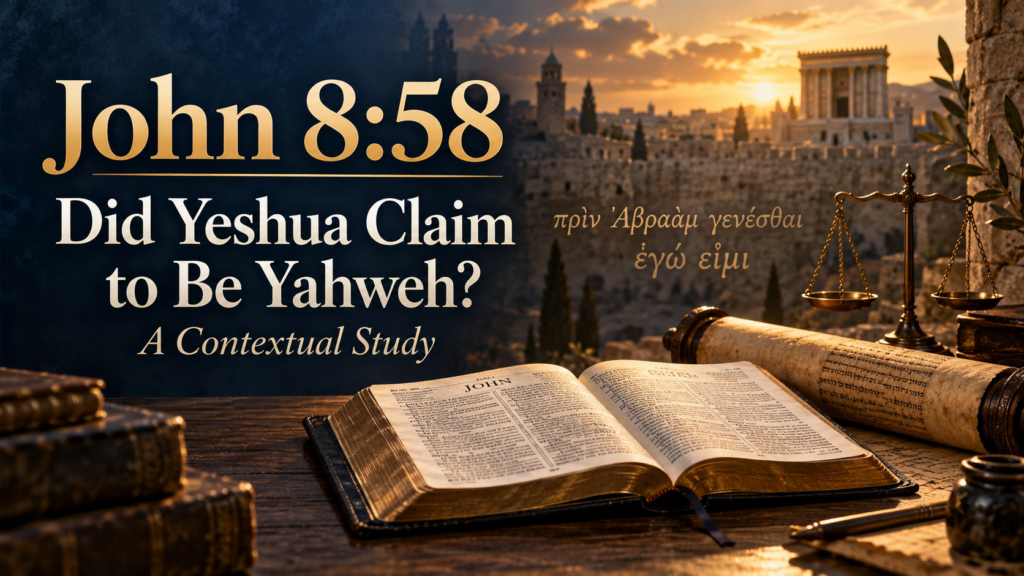
The Short Answer No. John 8:58 does not, by itself, establish that Yeshua claimed to be Yahweh. Yeshua (Jesus) was making a massive claim about His identity and His place in Yahweh’s ... Read more
No Match
Clear the filters or try a broader passage, book, doctrine, or original-language term.
The Berean Method
The index helps you find the study. The text still sets the boundaries: read the wording, follow the context, compare Scripture with Scripture, and stop where the evidence stops.
SCRIPTURE-FIRST AI
AI can make mistakes. Test everything against Scripture.