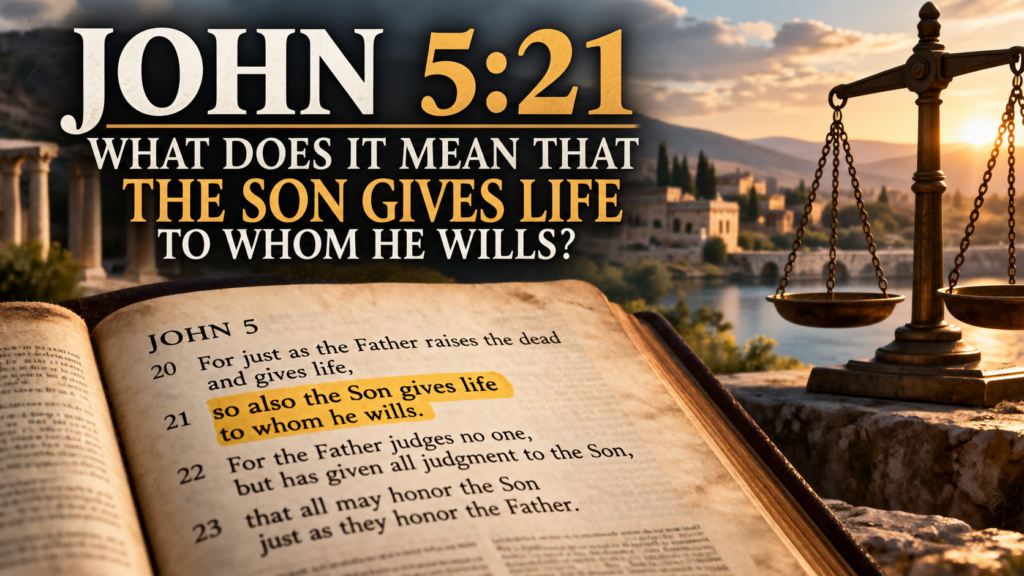
John 5:21: What Does It Mean That the Son Gives Life to Whom He Wills?
John 5:21 gives the Son real personal authority to give life to whom he wills, while John’s wider context places that authority within his relationship with the Father.
Study Index
Search The Berean Scale by passage, Bible book, doctrine, Greek or Hebrew term, or theological topic. Follow the evidence into the text instead of hunting through a chronological archive.
Search the library
Results update as you type. You can also combine search with a filter below.
Narrow the Library
Books currently represented in published studies.
Passage study, original language, doctrine, and prophecy.
Word studies, passages, doctrines, and recurring research themes.
Study Library
35 studies
John 5:21 gives the Son real personal authority to give life to whom he wills, while John’s wider context places that authority within his relationship with the Father.
Acts 11:26 says the disciples were first called Christians at Antioch. This Scripture study examines what identifies a follower of Yeshua and how faith, repentance, baptism, obedience, grace, and perseverance fit together.
John 5:26 says the Father gave the Son to have life in Himself. This study examines what that statement means within John 5:19–30 and how it relates to the Son’s authority to give life and execute judgment.
John 5:23 commands everyone to honor the Son as they honor the Father. This study examines John 5:19–30 to determine what the text explicitly says about the Son’s authority, life-giving work, judgment, and relationship to the Father.
This Berean review examines whether Isaiah 13 identifies America as Babylon and Russia and China as the attacking Medes, as claimed by The Master’s Voice Prophecy Blog and Celestial.
This Berean review examines Celestial’s “Dinner at the U.N.” prophecy, testing its claims about Russia, China, America, France, Germany, and America’s downfall against Scripture and verifiable evidence.
Ezekiel 38–39 does not explicitly identify modern Russia as Gog. This study examines the passage’s named peoples, the meaning of rosh, the northern invasion, and the historical weaknesses of linking Meshech with Moscow or Tubal with Tobolsk.
This Berean review tests Celestial’s June 27, 2019 “FLESH!: The Role of Russia” prophecy against Scripture and available evidence concerning Russia, China, America, Isaiah 13, warfare, judgment, and captivity.
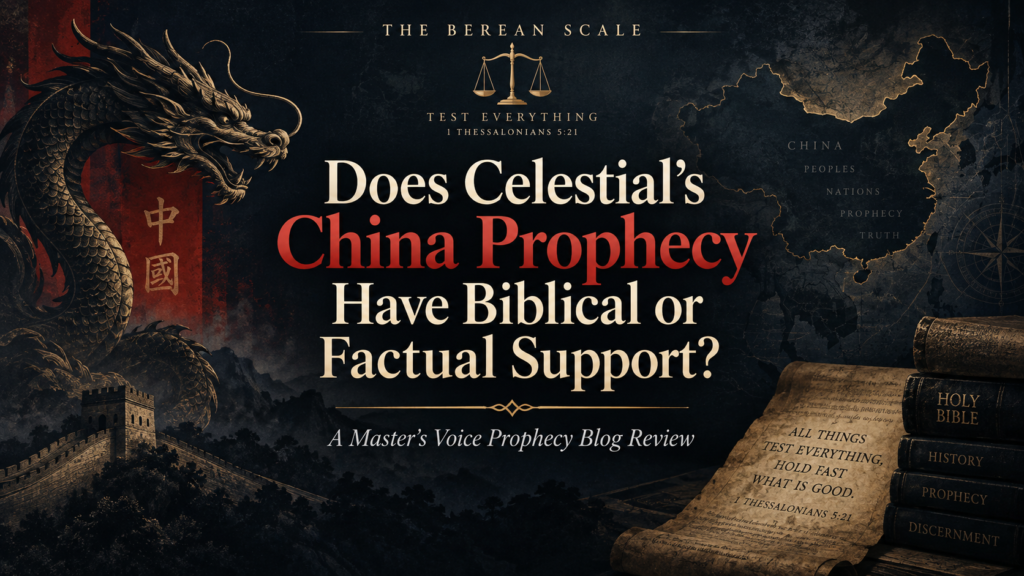
This Berean review tests Celestial’s June 27, 2019 “FLESH!: The Role of China” prophecy against Scripture and available evidence concerning China, Russia, Ukraine, America, warfare, technology, and captivity.
This Scripture-first hub examines recurring claims from The Master’s Voice Prophecy Blog, testing its prophecies, biblical interpretations, predictions, and modern nation mappings against Scripture and verifiable evidence.
Does Isaiah 20 predict America being defeated and enslaved by Russia and China? This Berean review tests a prophecy from The Master's Voice Prophecy Blog against Isaiah's actual context and the wider witness of Scripture.
John 17:5 most naturally presents Yeshua as having personal glory with the Father before the world existed, while preserving the Father-Son distinction and limiting conclusions the verse alone can prove.
The Berean test is a later label for the pattern Luke describes in Acts 17:11: receiving teaching eagerly while examining Scripture daily to determine whether the claims are true.
John 5:19 presents two truths together: Yeshua does nothing independently of the Father, yet does whatever the Father does and receives corresponding authority and honor.
Scripture records prophecy after Pentecost but does not explicitly settle whether it continues unchanged today. This study examines both continuationist and cessationist arguments and explains how believers should test modern prophetic claims.
John 14:28 says, “The Father is greater than I.” This study examines the verse’s farewell setting, Greek wording, sender-sent relationship, and wider Johannine context.
This Berean review examines a claim from The Master's Voice Prophecy Blog associated with Celestial. An independent audit of Celestial’s 2019 Russia prophecy examines Aaron’s rod, Putin’s claimed anointing, Isaiah 10, and whether later events provide meaningful confirmation.
This Berean review examines a claim from The Master's Voice Prophecy Blog associated with Celestial. An independent Berean Scale review examines Celestial’s China prophecy, including its Golden Dragon and Red Dragon identifications, resource claims, China-Japan talks, and predictions about technology and military power.
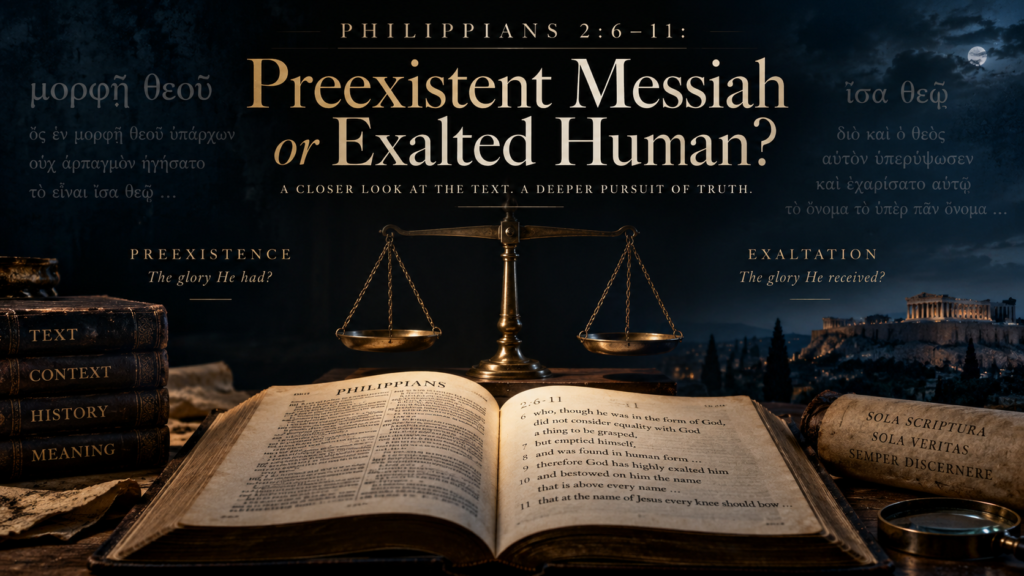
Philippians 2:6–11 presents Yeshua’s descent from a God-related condition into human slave-status, followed by exaltation by God. This study weighs the preexistence, Adamic, agency, and high-Christology readings of the passage.
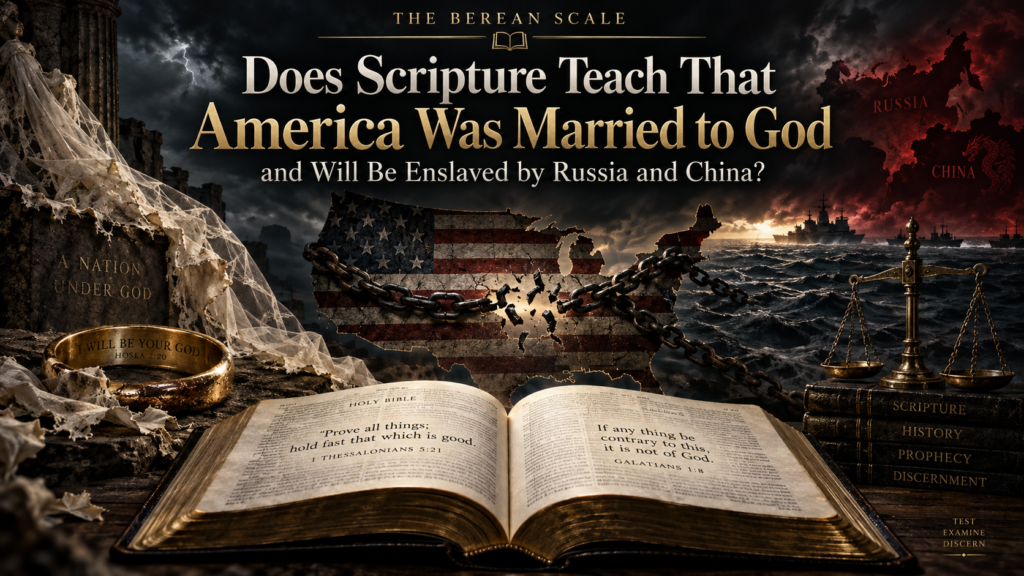
This Berean review examines a claim from The Master's Voice Prophecy Blog associated with Celestial. Celestial’s claimed vision says America was once married to Yeshua and will be invaded, enslaved, and deported by Russia and China. This Scripture-first review tests Ezekiel 16, Jeremiah 16, and Revelation 18, distinguishing biblical repentance from unsupported national and geopolitical predictions.
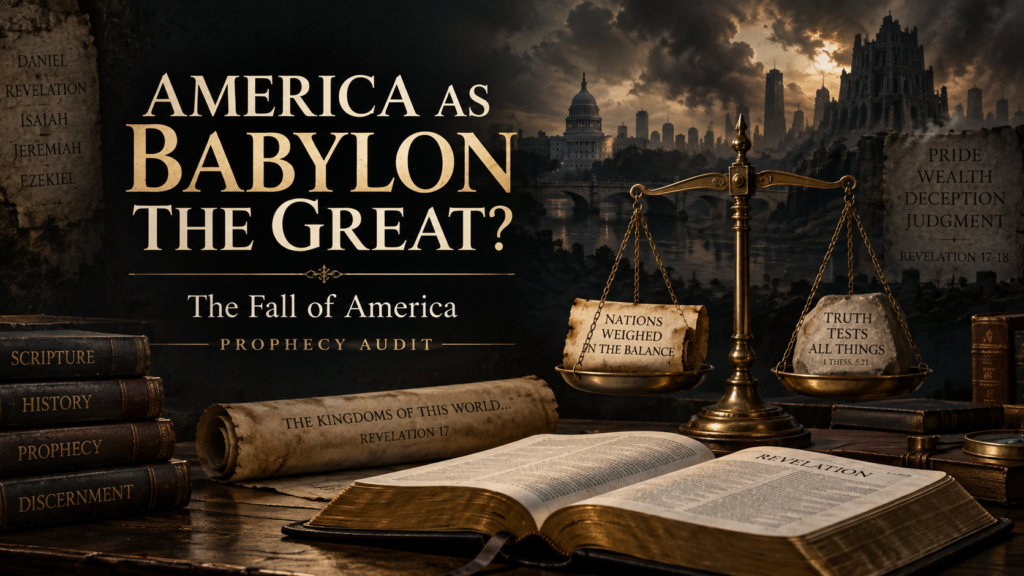
Does Revelation identify America as Babylon the Great? This Berean audit examines the biblical context, Russia claims, Ezekiel’s prophecies, and the source’s unverified predictions.
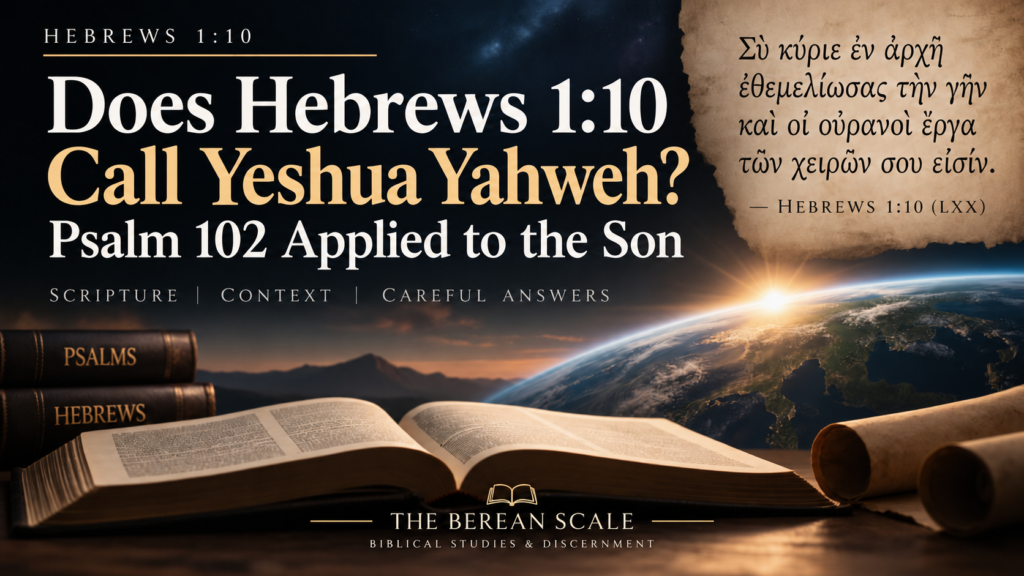
Hebrews 1:10–12 applies Psalm 102’s creator and permanence language to the Son. Does this call Jesus Yahweh, or describe divine agency?
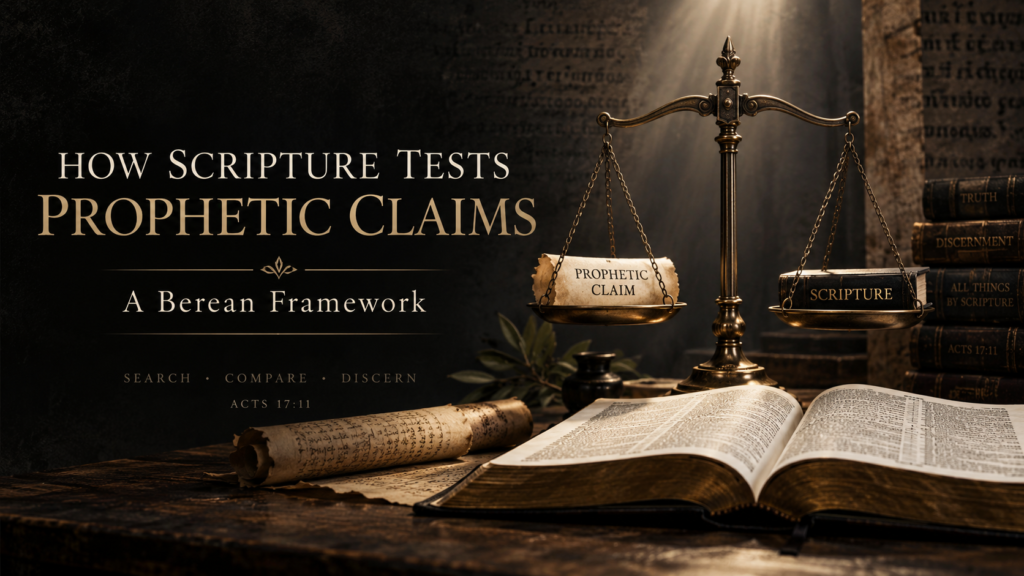
Scripture calls believers to test prophetic claims without gullibility or contempt. This Berean framework examines signs, failed predictions, conditional warnings, fruit, and unverifiable revelation.
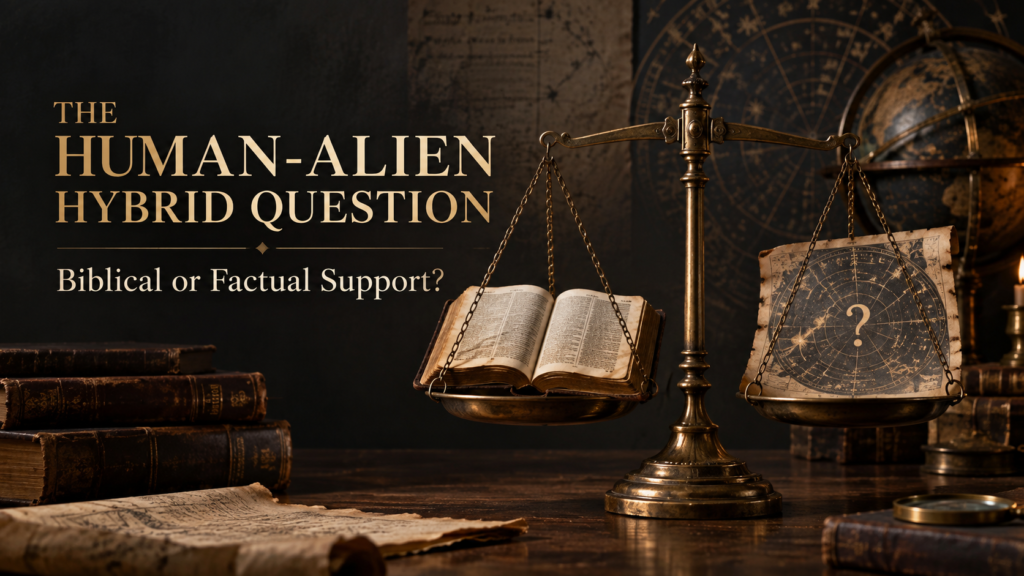
Genesis 6:1–4 does not establish extraterrestrial beings, surviving Nephilim bloodlines, literal chimeras, soulless clones, or technological loss of salvation. This study tests the article’s biblical claims and compares them with the available scientific evidence.
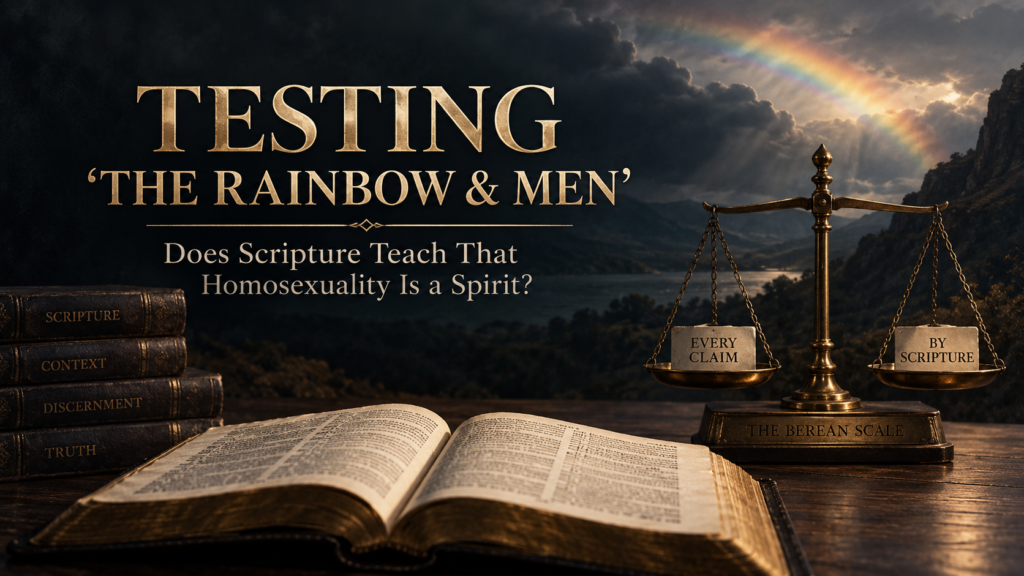
Genesis 9:8–17 defines the rainbow as Yahweh’s covenant sign. This study tests “The Rainbow & Men” against Scripture on demons, sexuality, trauma, and hybrids.
John 20:28 presents Thomas addressing the risen Yeshua as “my Lord and my God.” This study examines the Greek wording, context, alternatives, and Father-Son distinction.
John 1:1 distinguishes the Word from the Father while describing him as theos. This study examines the Greek grammar, the “God” and “a god” translations, and the prologue’s wider claims about creation, incarnation, and divine status.
Hebrews 1:8 most naturally applies the direct address “O God” to the Son, while verse 9 distinguishes him from “God, your God,” who anoints him.
Mark 13:32 says that no one knows the day or hour—not the angels, nor the Son—except the Father. This study examines the verse’s context, Greek wording, Christological implications, and call to watchfulness.
Paul identifies the Father as the one God and Yeshua Messiah as the one Lord in 1 Corinthians 8:6. This study examines the verse’s context, Greek wording, Shema background, and competing theological interpretations.
First Timothy 2:5 says there is “one God” and “one mediator between God and mankind, the man Messiah Yeshua.” We examine the Greek, Paul’s wider usage, John 17:3, John 20:28, and the strongest Trinitarian reading.
Celestial’s “The Time Has Come” prophecy makes specific claims about aviation disasters, MH370, spiritual interference, judgment, and the end times. We put the message on the scale, compare its claims with Scripture, and separate what the Bible explicitly teaches from what remains interpretation or speculation.
Read Study
John 17:3 calls the Father “the only true God” and identifies Yeshua as the Messiah He sent. We examine the Greek, John 17:5, John 20:28, and the strongest Trinitarian reading.
The Short Answer John 10:30 does not explicitly say that Yeshua and the Father are “one God,” “one being,” or “one essence.” It says: “I and the Father are one.” The immediate ... Read more
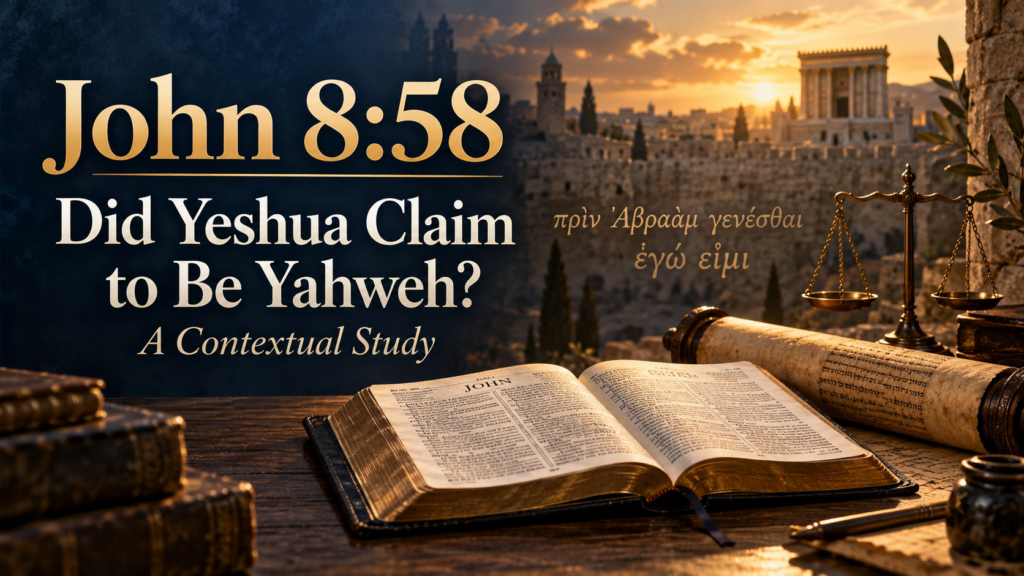
The Short Answer No. John 8:58 does not, by itself, establish that Yeshua claimed to be Yahweh. Yeshua (Jesus) was making a massive claim about His identity and His place in Yahweh’s ... Read more
No Match
Clear the filters or try a broader passage, book, doctrine, or original-language term.
The Berean Method
The index helps you find the study. The text still sets the boundaries: read the wording, follow the context, compare Scripture with Scripture, and stop where the evidence stops.
SCRIPTURE-FIRST AI
AI can make mistakes. Test everything against Scripture.